Google Apps for Business

Showing posts with label Bio-Chemistry. Show all posts

Friday, January 16, 2015

Peptides: Chemistry and Biology


Peptides: Chemistry and Biology
Edited by Norbert Sewald & Hans-Dieter Jakubke

Thoroughly updated, incorporating around 25 % new material, Sewald/Jakubke remains the only modern and scientifically up-to-date advanced textbook on peptide biochemistry, distilling the knowledge of hundreds of publications into a highly readable synopsis of this diverse field.
The authors explain the broad fundamentals of peptide synthesis and structure, systematically addressing important families of biologically active peptides, and adopting an interdisciplinary approach that covers application areas in biotechnology, pharmaceutical science, and biomedicine. One major focus is on such "hot" research topics as pseudopeptides, peptidomimetics, and combinatorial synthesis.
This new edition also features study questions for each learning unit, for easier self-study and classroom teaching

All Download Links Shows ads, Please Click on Skip Ad at Top Right Corner of the Page to Download Books


Link 1
or
Link 2
or
Link 3

Tuesday, January 13, 2015

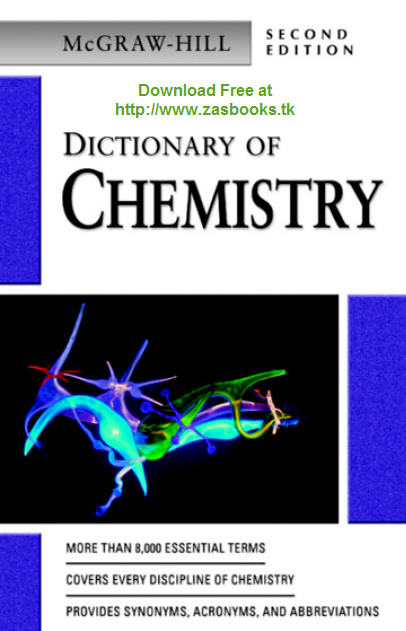
Dictionary of Chemistry, 2nd Edition


Dictionary of Chemistry
McGraw-Hill, Second Edition

McGraw-Hill Dictionary of Chemistry (2nd Edition) is compiled by McGraw-Hill and it is published in 2003. The McGraw-Hill Dictionary of Chemistry provides a compendium of 8000 terms that are central to chemistry and related fields of science and technology. The coverage in this Second Edition is focused on the the areas of analytical chemistry, general chemistry, inorganic chemistry, organic chemistry, physical chemistry, and spectroscopy, with new terms added and others revised as necessary.

more than 8000 essential terms
covers every discipline of chemistry
provides synonyms, acronyms and abbreviations

All Download Links Shows ads, Please Click on Skip Ad at Top Right Corner of the Page to Download Books


http://booksfree4u.tk/?p=12


Wednesday, January 7, 2015

Handbook of Enzymes, Volume 26


Handbook of Enzymes, Volume 26
Edited by Schomburg . Schomburg

Springer Handbook of Enzymes provides data on enzymes sufficiently well characterized. It offers concise and complete descriptions of some 5,000 enzymes and their application areas. Data sheets are arranged in their EC-Number sequence and the volumes themselves are arranged according to enzyme classes.
This new, second edition reflects considerable progress in enzymology: many enzymes are newly classified or reclassified. Each entry is correlated with references and one or more source organisms. New datafields are created: application and engineering (for the properties of enzymes where the sequence has been changed). The total amount of material contained in the Handbook has more than doubled so that the complete second edition consists of 39 volumes as well as a Synonym Index. In addition, starting in 2009, all newly classified enzymes are treated in Supplement Volumes.
Enzymes are applied in organic synthesis and in analytical chemistry, in industrial production processes of pharmaceuticals and in food processing. Finding a suitable enzyme for a desired transformation or with a defined specificity is not always an easy task. The Springer Handbook of Enzymes provides all the information for selecting the proper enzyme to perform defined transformations in a given environment. The Springer Handbook of Enzymes devotes a variable number of pages for each enzyme, depending on the amount of information available with the EC number as ordering criterion within a volume

All Download Links Shows ads, Please Click on Skip Ad at Top Right Corner of the Page to Download Books

or

Tuesday, December 9, 2014

Mark's Basic Medical Biochemistry


Mark's Basic Medical Biochemistry
A Clinical Approach

Marks' Basic Medical Biochemistry takes a patient-oriented approach that links biochemistry to physiology and pathophysiology, allowing students to apply fundamental concepts to the practice of medicine--from diagnosing patients to recommending effective treatments. Intuitively organized chapters center on hypothetical patient vignettes and helpful icons allow for smooth navigation, making complex concepts easier to grasp! Access additional resources online with purchase of text! Instructors receive access to a dedicated Image Bank as well as all student features, which include fully searchable eBook; animations depicting 9 key biochemical concepts; interactive question bank with more than 450 USMLE questions and complete rationales; full patient summaries for each patient discussed in the text; comprehensive list of disorders covered in the text, with relevant web links; and suggested readings for further exploration

All Download Links Shows ads, Please Click on Skip Ad at Top Right Corner of the Page to Download Books

or

Basic Concepts in Biochemistry


Basic Concepts in Biochemistry
A Student's Survival Guide

This first book in McGraw-Hill's BASIC CONCEPTS SERIES pioneered a method of presenting hard-to-grasp topics in a readily understandable manner, thereby helping students survive the rigors of medical school. The second edition continues to innovatively review the toughest concepts in biochemistry for maximum comprehension in a short period of time. Unlike conventional texts or review books that stress memorizing facts, BASIC CONCEPTS stresses the mastering of fundamental concepts, so that the reader truly comprehends the material and feels comfortable applying it. Dr. Gilbert uses simple, jargon-free language and award-winning teaching techniques including algorithms, mnemonics and clinical examples. Material is presented in a building block approach, in bite-size summary form, from easy to harder-to-grasp concepts

All Download Links Shows ads, Please Click on Skip Ad at Top Right Corner of the Page to Download Books

or

Monday, December 8, 2014

Biochemistry of Lipids, Lipoproteins and Membranes


Biochemistry of Lipids, Lipoproteins and Membranes

Research on the biochemistry and molecular biology of lipids and lipoproteins has experienced remarkable growth in the past 20 years, particularly with the realization that many different classes of lipids play fundamental roles in diseases such as heart disease, obesity, diabetes, cancer and neurodegenerative disorders. The 5th edition of this book has been written with two major objectives. The first objective is to provide students and teachers with an advanced up-to-date textbook covering the major areas of current interest in the lipid field. The chapters are written for students and researchers familiar with the general concepts of lipid metabolism but who wish to expand their knowledge in this area. The second objective is to provide a text for scientists who are about to enter the field of lipids, lipoproteins and membranes and who wish to learn more about this area of research. All of the chapters have been extensively updated since the 4th edition appeared in 2002.

All Download Links Shows ads, Please Click on Skip Ad at Top Right Corner of the Page to Download Books

or

Harper's Illustrated Biochemistry


Harper's Illustrated Biochemistry

Clear, concise, and in full color, Harper’s Illustrated Biochemistry is unrivaled in its ability to clarify the link between biochemistry and the molecular basis of disease. Combining outstanding full-color illustrations with integrated coverage of biochemical diseases and clinical information, Harper’s offers an organization and careful balance of detail and brevity not found in any other text on the subject.

All Download Links Shows ads, Please Click on Skip Ad at Top Right Corner of the Page to Download Books

or

Bio-Analytical Chemistry


Bio-Analytical Chemistry

Bioanalytical Chemistry provides a thorough introduction for students and practitioners with a broad range of backgrounds from chemistry to medicine. In so doing, it brings together many of the techniques commonly used by biochemists and molecular biologists. The text includes entire chapters on design and implementation of enzyme assays; mass spectrometry; and validation of new methods. Each chapter progresses from basic concepts to applications involving real samples, and ends with a set of problems, while an appendix contains selected answers. The authors have limited mathematical derivations to those that are essential for an understanding of each method and they include a list of suggested reading for further information. This textbook provides an ideal companion for students, researchers, and industrial scientists working in chemistry, biology, biochemistry, pharmacy, and medicine.

All Download Links Shows ads, Please Click on Skip Ad at Top Right Corner of the Page to Download Books

or

Sunday, December 7, 2014

Bio-Physical Chemistry


Bio-Physical Chemistry

"Biophysical Chemistry is an outstanding book that delivers both fundamental and complex biophysical principles, along with an excellent overview of the current biophysical research areas, in a manner that makes it accessible for mathematically and non–mathematically inclined readers." (Journal of Chemical Biology, February 2009)


This text presents physical chemistry through the use of biological and biochemical topics, examples and applications to biochemistry. It lays out the necessary calculus in a step by step fashion for students who are less mathematically inclined, leading them through fundamental concepts, such as a quantum mechanical description of the hydrogen atom rather than simply stating outcomes. Techniques are presented with an emphasis on learning by analyzing real data.

Presents physical chemistry through the use of biological and biochemical topics, examples and applications to biochemistry
Lays out the necessary calculus in a step by step fashion for students who are less mathematically inclined
Presents techniques with an emphasis on learning by analyzing real data
Features qualitative and quantitative problems at the end of each chapter
All art available for download online and on CD–ROM

All Download Links Shows ads, Please Click on Skip Ad at Top Right Corner of the Page to Download Books

or

Medical Biochemistry at a Glance


Medical Biochemistry at a Glance

Offering a concise, illustrated summary of biochemistry and its relevance to clinical medicine, Medical Biochemistry at a Glance is intended for students of medicine and the biomedical sciences such as nutrition, biochemistry, sports science, medical laboratory sciences, physiotherapy, pharmacy, physiology, pharmacology, genetics and veterinary science. It also provides a succinct review and reference for medical practitioners and biomedical scientists who need to quickly refresh their knowledge of medical biochemistry.
The book is designed as a revision guide for students preparing for examinations and contains topics that have been identified as 'high-yield' facts for the United States Medical Licensing Examination (USMLE)

All Download Links Shows ads, Please Click on Skip Ad at Top Right Corner of the Page to Download Books

or

Sunday, December 30, 2012

Vitamins...Their Role in the Human Body


Vitamins: Their Role in the Human Body

This single-source reference draws together the current knowledge of the vitamins' biological properties in the context of human nutrition. Vitamins are co-enzymes, antioxidants or precursors of hormones and are therefore involved in a great many biochemical and physiological processes. They play a vital role in the maintenance of health, and there is evidence that dietary sources of vitamins have beneficial effects in the prevention of heart-related diseases, bone diseases and possibly cancer.
Following introductory chapters on historical and nutritional aspects of vitamins, the next four chapters cover relevant and detailed aspects of physiology and functional anatomy, biochemistry, immunology and the regulation of protein synthesis by nuclear hormone receptors. These background chapters, supported by a glossary of terms, provide the scientific principles upon which vitamin functions are based. The following thirteen chapters deal with each vitamin in turn. Subject areas include chemical structure, intestinal absorption, transport, metabolism, biochemical and physiological actions, immunoregulatory properties, deficiency-related diseases and potential toxicity. An extensive bibliography refers the reader to the original research literature.

All Download Links Shows ads, Please Click on Skip Ad at Top Right Corner of the Page to Download Books


Saturday, December 29, 2012

Biochemistry


Biochemistry

The Third edition of Biochemistry  preserves the clear writing, strong physical chemistry background, and the use of the "Tools of Biochemistry" feature to underscore the experimental nature of biochemistry.  This edition has been comprehensively and consistently updated to present the current developments in a rapidly evolving field

All Download Links Shows ads, Please Click on Skip Ad at Top Right Corner of the Page to Download Books

Tuesday, November 1, 2011

Practical Organic and Biochemistry


Practical Organic and Biochemistry
by R. Plimmer
Publisher: Longmans 1918
ISBN/ASIN: 1112355049
Number of pages: 664

Description:
This book represents an attempt to give to the worker a nearly complete statement of the whole subject. The essential points are illustrated by the practical experiments. The book is intended mainly for medical students, but it contains the essentials for all students of Biology.

All Download Links Shows ads, Please Click on Skip Ad at Top Right Corner of the Page to Download Books

Tuesday, January 25, 2011

Biochemistry


Biochemistry
Edited by Jeremy M. Berg, John L. Tymoczko and Lubert Stryer

In the new edition of Biochemistry, instructors will see the all the hallmark features that made this a consistent bestseller for the undergraduate biochemistry course: exceptional clarity and concision, a more biological focus, cutting-edge content, and an elegant, uncluttered design. Accomplished in both the classroom and the laboratory, coauthors Jeremy Berg and John Tymoczko draw on the field's dynamic research to illustrate its fundamental ideas.

All Download Links Shows ads, Please Click on Skip Ad at Top Right Corner of the Page to Download Books

Download Link 1
or
Download Link 2
or
Download Link 3

Friday, November 19, 2010

Handbook of Vitamins


Handbook of Vitamins, Fourth edition
Edited by Janos Zempleni

True to the clinical focus of the previous editions, Handbook of Vitamins, 4th edition is comprised of comprehensive summaries that analyze the chemical, physiological, and nutritional relationships and highlight the newly described and identified functions for all recognized vitamins.

Each chapter covers the physiology, biochemistry, genomics, and molecular biology of its respective vitamin with specific information on coenzyme function, cell signaling, vitamin status, and antioxidant and anti-inflammatory defense.

Features:

Presents the most recent research in vitamins and gene expression, vitamin-dependent genes, and vitamin effect on DNA stability
Features new vitamin dietary requirements
Includes new chapters on vitamin-dependent modification of chromatin, and analysis using accelerated mass spectrometry
Encompasses both classical and modern approaches to vitamins, focusing on human nutrition, vitamin analysis, and vitamin action at the molecular level
Contains contributions from international experts including the most recognized expert on vitamin K
Encompassing and incorporating newly identified roles of vitamins in cellular and organism regulation, the Handbook of Vitamins, Fourth Edition continues to offer the most respected, up-to-date research with ready clinical application that we have come to expect.

All Download Links Shows ads, Please Click on Skip Ad at Top Right Corner of the Page to Download Books

Download Link 1
or
Download Link 2 

Thursday, October 14, 2010

Color Atlas of Biochemistry


Color Atlas of Biochemistry
Second edition, revised and enlarged
Edited by Jan Koolman and Klaus-Heinrich Roehm

Biochemistry is a dynamic, rapidly growing field, and the goal of this color atlas is to illustrate this fact visually. The precise boundaries between biochemistry and related fields, such as cell biology,anatomy,physiology, genetics, and pharmacology, are dif cult to define and, in many cases, arbitrary. This overlap is not coincidental. The object being studied is often the same—a nerve cell or a mitochondrion, for example—and only the point of view differs. This second edition was carefully revised and a significant number of new plates were added to cover new developments.

All Download Links Shows ads, Please Click on Skip Ad at Top Right Corner of the Page to Download Books

Download Link 1
or
Download Link 2

Sunday, August 29, 2010

Medical Biochemistry: Human Metabolism in Health and Disease


Medical Biochemistry: Human Metabolism in Health and Disease

Human metabolism is a key component of the basic science knowledge that underlies the practice of medicine and allied health professions. It is fundamental to understanding how the body adapts to physiologic stress, how defects in metabolism
result in disease, and why data from the clinical chemistry laboratory are useful to diagnose disease and monitor the efficacy of treatment.

Medical Biochemistry: Human Metabolism in Health and Disease Over the more than three decades that each of the authors has been teaching biochemistry to medical students, we have found students increasingly overwhelmed with details that tend to obscure rather than elucidate principles of human metabolism.

The main aim of this book was to provide students in the health professions with a concise resource that will help them understand and appreciate the functions, constituent reactions, and regulatory aspects of the core pathways that constitute human metabolism and which are responsible for maintaining homeostasis and well-being in humans. Authors tried to accomplish this by emphasizing function, regulation, and disease processes, while minimizing discussion of reaction mechanisms and details of enzyme structure.

Each chapter is organized in a consistent manner beginning with an explanation of the main functions of the pathway under discussion. Next comes a brief accounting of the cells, tissues, and organs in which the pathway is expressed and the conditions under which the normal function of the pathway is especially important. The bulk of each chapter is devoted to the reactions that account for the function of the pathway, with emphasis on key steps in the pathway. The next section of each chapter discusses the ways in which the activity of the pathway is regulated by hormones, genetic factors, or changes in the intracellular concentration of key metabolites. Each chapter concludes with a discussion of the more common and illustrative diseases that result from defects in or derangements of regulation of the pathway.

This volume is deliberately modest in size. Instead of providing exhaustive coverage of all the reactions that human cells and tissues are capable of executing, we have chosen examples that illustrate the physiologic and pathophysiologic significance of the topic. The authors’ expectation is that each chapter will be read for comprehension rather than to provide abundant fact and detail. During their subsequent education and professional careers, the readers will undoubtedly have need for more information on many topics discussed in this book.


Download

Monday, March 1, 2010

Prostaglandins, Leukotrienes, and the Immune Response


Prostaglandins, Leukotrienes, and the Immune Response
Publisher: Cambridge University Press | ISBN: 0521334837 | 1988 | DJVU | 236 pages | 1.4 mb

This study looks at the way the products of arachidonic acid metabolism are active both in normal and abnormal immune responses. While some of the fundamental issues such as whether lymphocytes are capable of producing prostaglandins and leukotrienes are still hotly debated, the evidence is overwhelming that many specific immunological problems and disease states are associated with alterations in the normal balance of arachidonic acid metabolism. This book provides a review of the history and chemistry of the arachidonic acid cascade as well as an exhaustive survey of the literature concerning the interaction of arachidonic acid metabolites with cells of the immune system. The author also presents and discusses the evidence demonstrating prostaglandin and leukotriene participation in response to injury and in malignancy, tissue and organ rejection, rheumatoid arthritis, autoimmunity and allergy.

Biochemistry (Board Review Series)


Biochemistry (Board Review Series)
Publisher: Harwal Pub Co | ISBN: 0683055976 | edition 1994 | File type: PDF | 350 pages | 15,3 mb

This book is outstanding for use while taking class and then reviewing material for Boards. Clear and concise. The diagrams are clear and somehow stick in your head. Questions at end of chapters are really good. Good explanations too.


Tuesday, August 11, 2009

MCQ's in Biochemistry


MCQ's in Biochemistry
Edited by G. Vidya Sagar

Competitive Examinations are the order of the day. All Colleges conducting professional courses at PG level are admitting students based on common entrance examination, which is of objective type. In Pharmacy, M.Pharm admissions are based on qualifying the GATE enterance examination conducted by Govt. of India. In this book, The author has done good work in preparing several objective questions which help the students to face the subject in the examination with poise and confidence. The book is well balanced and consists of multiple choice questions from all the important topics like carbohydrate metabolism and other important Biochemical aspects. The typesetting and quality of printing is good. The author is also well experienced in taking up this type of work. I recommend this book to all the students preparing for GATE examination and also for Medical and Pharmacy College libraries.

Link 1
https://adf.ly/w6iaX
or
Link 2
http://adfoc.us/25769754075148
or
Link 3
http://p.pw/baelQd

Ads

Free PHP Hosting

Disclaimer